Warm spot on your floor: could it be a slab leak?
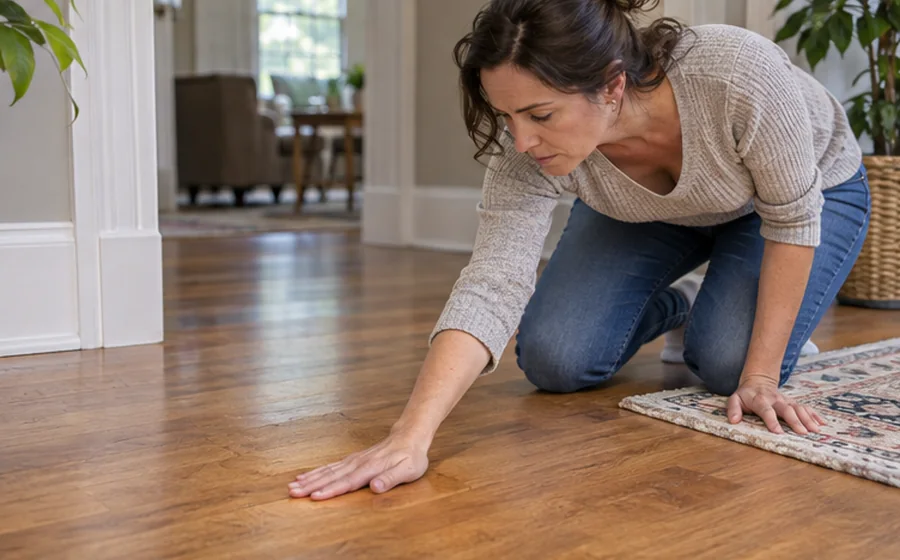
A warm or hot spot on a slab floor can mean a leaking hot-water line under the concrete, because the leaking pipe heats the slab. Other causes include sunlight, ducts or radiant heat. If the spot stays warm at night and your water meter moves, call for leak detection.
Why a hot water leak warms the floor
When a hot-water line leaks under a slab, heat spreads into the concrete and the flooring above it. You may feel it in bare feet, notice tile that is warm in one area, or see a patch that dries or changes color.
Other causes of warm floor spots
- Sun through a window or glass door
- Ducts or heating components near or in the slab
- Radiant floor heating
- A water heater or appliance against a wall near the spot
- Recent cooking or an appliance running nearby
How to tell the difference
- The spot is still warm at night or when the HVAC is off
- The warm area follows the path from the water heater to a bathroom or kitchen
- Hot water takes a long time to arrive or runs out quickly
- The water heater runs more than usual or your gas or electric bill is higher
- Your water meter moves with all water off
What to do first
- Do the meter test.
- If the meter moves, close the cold-water inlet valve at the water heater and turn the heater off (breaker off or gas to pilot/off, per its manual).
- Close the main water shutoff if you see water or damage.
- Do not cut into the floor.
- Take photos and call for detection.
Thermal imaging helps trace hot-water leaks. See thermal imaging leak detection and slab leak detection.
Related help
- Water Meter Running With Everything Off
- Find a Water Leak Under Concrete
- Slab leak detection
- Emergency slab leak checklist
Frequently asked questions
Can a slab leak make the floor warm?
Yes. A leaking hot-water line can heat the slab and flooring above it.
What if only one spot is warm?
A single warm spot can still be a hot-water leak, especially if it lies along the route from the water heater. Check your meter and hot-water performance.
Is a warm floor dangerous?
A hot-water leak can damage flooring and encourage mold. Limit damage by shutting off water and calling for detection.
Do I need to break the concrete to find the leak?
No. Acoustic, electronic and thermal tools can locate the leak from above the floor.