Slab leak detection in Greer, SC that finds the leak before anyone cuts concrete
Slab leak detection is the process of locating a water supply leak in pipes that run in or under a concrete slab foundation. A technician pressure-tests the lines, then uses acoustic, electronic and thermal tools to mark the exact spot from above the floor, usually in one to three hours.
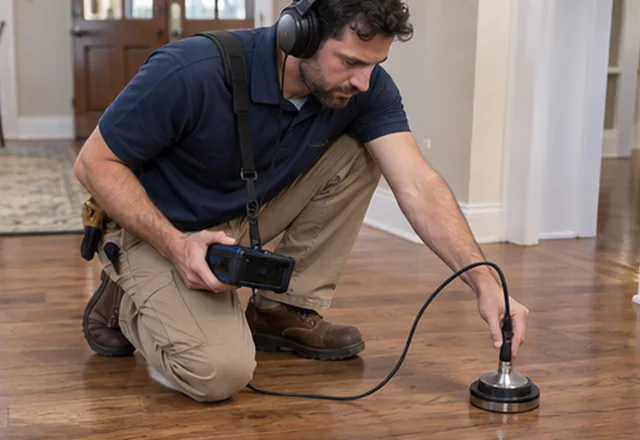
What is slab leak detection?
A slab leak is a leak in a water pipe buried in or beneath the concrete foundation of your home. Because the pipe cannot be seen, homeowners usually notice a symptom first: a bigger water bill, a warm patch of floor, or the sound of water running when nothing is on.
Our detection visit is built around one goal: marking the leak within a small area so any repair opening is as small as possible. We never recommend cutting the slab until the leak is confirmed by more than one method, and you receive a written report with photos either way.
Signs you may need slab leak detection
- Water or sewer bill that jumps without a change in habits
- Water meter that keeps moving with every fixture turned off
- Warm or hot spots on tile, wood or laminate floors
- Sound of running or hissing water in a quiet house
- Damp carpet, buckled flooring or a musty smell near baseboards
- Cracks in walls, grout lines or the foundation
- Low water pressure throughout the house
- Water heater that runs constantly or never keeps up
Our slab leak detection process
- Intake: we review bills, pipe material, home age and what you have noticed
- Meter and pressure test to confirm whether the system is actually leaking
- Isolation test to find which line is losing pressure: hot, cold or main
- Acoustic and electronic listening along the suspected route
- Thermal imaging where hot-water lines run under the floor
- Cross-check with a second method, then mark the leak on the floor
- Written report with photos, and repair options with pricing explained
Equipment and methods
- Pressure test gauges
- Show whether a line holds pressure and which line is failing.
- Acoustic correlators and ground microphones
- Hear the sound of escaping water through concrete and soil.
- Infrared thermal camera
- Maps warm slab areas caused by leaking hot-water lines.
- Moisture meter
- Confirms hidden moisture in flooring and drywall.
- Pipe locator
- Traces the real route of buried lines so we search in the right place.
When to choose this service
Choose full slab leak detection when you have symptoms but do not yet know where the problem is. If you already know the line (for example an outdoor main line), start with water line leak detection. If you only need heat mapping for hot-water lines, thermal imaging may be enough, though a complete inspection combines methods.
Cost and timing
Detection is priced separately from repair. Cost depends on home size, number of lines to isolate, whether access is indoors or outdoors, and whether tracer gas is needed. We give a clear price before we start. See our full cost guide for typical ranges and what affects them. See the slab leak cost guide.
Slab Leak Detection in Greer and the Upstate
Greer sits in the Piedmont region of South Carolina, where expansive red clay soil, seasonal moisture swings and municipal water pressure that can run high all put stress on pipes embedded in concrete. Many Greer, Taylors and Duncan neighborhoods include slab-on-grade homes built from the 1960s through today, with copper, CPVC or PEX supply lines depending on the era.
Slab Leak Detection FAQs
How do you find a leak under a slab without breaking concrete?
We pressure-test each line, then combine acoustic listening, electronic tracing and infrared imaging from above the floor. Concrete is opened only at the confirmed point.
How can I tell if I have a slab leak in Greer?
Warning signs include a rising water bill, a moving meter with everything off, warm floor spots, the sound of water in a silent house and low pressure. A meter test is a quick first check.
How long does slab leak detection take?
Most inspections take one to three hours depending on home size, number of lines and access.
How accurate is slab leak detection?
With trained technicians and multiple methods, a leak can usually be narrowed to a small area. We confirm with a second method before marking.
Is slab leak detection covered by insurance?
Many policies cover detection and resulting water damage, but often not the pipe itself. We provide a written report you can submit with a claim. Check your policy for details.